

Celebrating
30+ Years
- Est. 1995
Widely used in construction until the 1980s, the dangers of asbestos became evident when ill health was directly linked with asbestos exposure. This triggered many countries to ban or heavily restrict its use.
However, many people are still unaware of asbestos risks. As asbestos is built into the structure of a building, we don’t always know it’s there. This ‘out of sight, out of mind’ mentality means the hidden threat can linger in buildings for decades.
Efforts to educate about asbestos are ongoing, but we’re here to fill some gaps and clear up any confusion about the harmful material.

Asbestos is a naturally occurring mineral fibre that was once widely used in various industries for its desirable properties, such as strength, durability, and resistance to heat and fire. There are several types of asbestos minerals, including chrysotile, amosite, and crocidolite.
So, when was asbestos first discovered? Let’s go back thousands of years to ancient Greek and Roman times to find out. The word “asbestos” is derived from the Greek word “asbeston,” meaning “unquenchable” or “inextinguishable,” reflecting its resistance to fire. The ancient Greeks and Romans observed its fire-resistant properties and used asbestos in various applications, such as clothing and lamp wicks.
In the past, asbestos was commonly used in building materials, insulation, brake linings, and other products.
Back in the day, asbestos was the construction superhero. Its fire-resistant, durable nature made it a go-to material. From roofs to car brakes, asbestos was everywhere. It was cheap, malleable and played a starring role in insulation and flooring.
However, widespread use didn’t start until after the industrial revolution in the late 19th and early 20th centuries. Its popularity quickly soared, and asbestos became everyone’s favourite construction material.
Until its dark side emerged, and we realised inhaling those tiny fibres led to serious health issues. Asbestos went from being the hero to the villain of the construction story.
Today, asbestos is synonymous with danger. However, we’re still many years away from eradicating asbestos-containing materials from the vast number of structures housing it.
Improper asbestos removal may contaminate the air and surfaces with toxic fibres. Inadequate precautions can expose homeowners, neighbours, and workers to long-term health hazards.
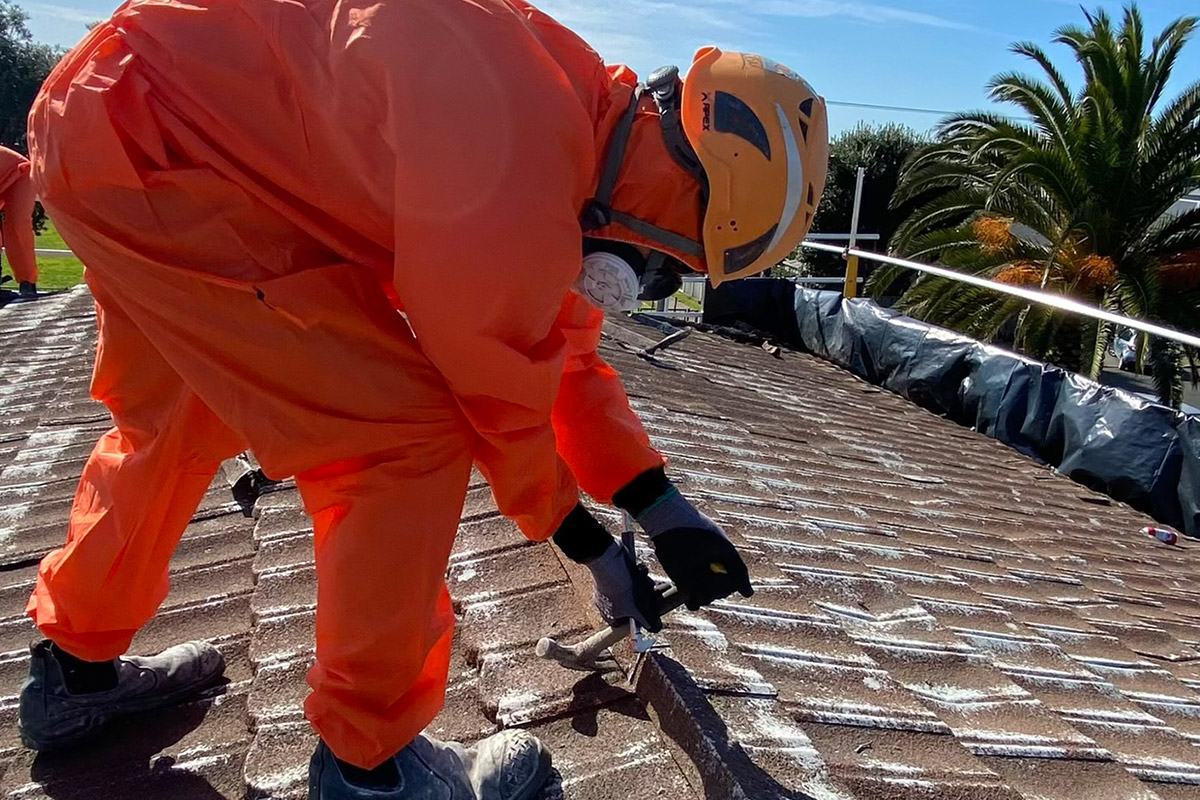
We can’t stress enough the importance of professional asbestos abatement. At AR Plus, we understand what this involves and ensure proper containment, equipment, and disposal methods are used on all projects.
Cutting corners on removal invites a silent threat, endangering lives with unseen consequences that can emerge years later. We prioritise your safety, leaving no trace of asbestos anywhere in your building.
As professional asbestos removalists, we go through a strategic process to detect asbestos.
First, we visually identify potential asbestos-containing materials in your property. We then carefully collect samples without disturbing the fibres and send these samples off to be tested in a laboratory environment.
In the lab, various techniques are used to identify the presence and type of asbestos.
This thorough process ensures accurate detection and emphasises the importance of leaving this task to certified professionals.
We commonly find asbestos in roofing, insulation and flooring. However, asbestos can be present in decorative ceiling tiles, textured paints, pipe insulation, car parts and appliances.
Yes, asbestos comes in two main types: Chrysotile and Amphibole. Chrysotile, or white asbestos, is widely used in construction. Amphibole asbestos includes Amosite (brown) and Crocidolite (blue) used in insulation and the less common Tremolite and Anthophyllite. All types pose health risks when airborne.
The importation and use of raw asbestos are banned in New Zealand. However, there are some exceptions for specific products containing a low percentage of asbestos.
Asbestos exposure occurs when fibres are disturbed and become airborne. As asbestos deteriorates, microscopic fibres can break away and release into the air.
No level of asbestos exposure is considered safe.
Call our team as soon as you suspect asbestos or if you simply want to rule it out. We can assess your site and remove any asbestos in a timely manner to minimise downtime and eliminate potential health risks.


"*" indicates required fields